Making a 1,200-product technical catalogue easy to act on
igus India needed a B2B WooCommerce catalogue that served engineers and procurement teams evaluating cables on highly technical specifications, without oversimplifying the engineering data they actually need to make a decision.
View Live1,200+ cable products across multiple types and specifications, serving engineers and procurement teams who need to identify the right part on technical requirements, without a catalogue structure oversimplifying the data they need.
Product designer and developer, adapting the global igus design system for the Indian market and building the full WooCommerce experience.
- Structured categories, navigation, and filters around how technical buyers actually evaluate products, application type, then mechanical constraints, then electrical ratings.
- Adapted the existing global igus design system for Indian enterprise procurement conventions rather than starting from scratch.
- Designed and developed the complete WooCommerce experience end to end.
A scalable B2B e-commerce experience that makes the technical catalogue easier to discover and evaluate, while maintaining enterprise-level consistency with the global igus brand.
Engineers evaluate cables by mechanical and electrical constraints before anything else, the filter hierarchy mirrors that decision order rather than a generic category tree.
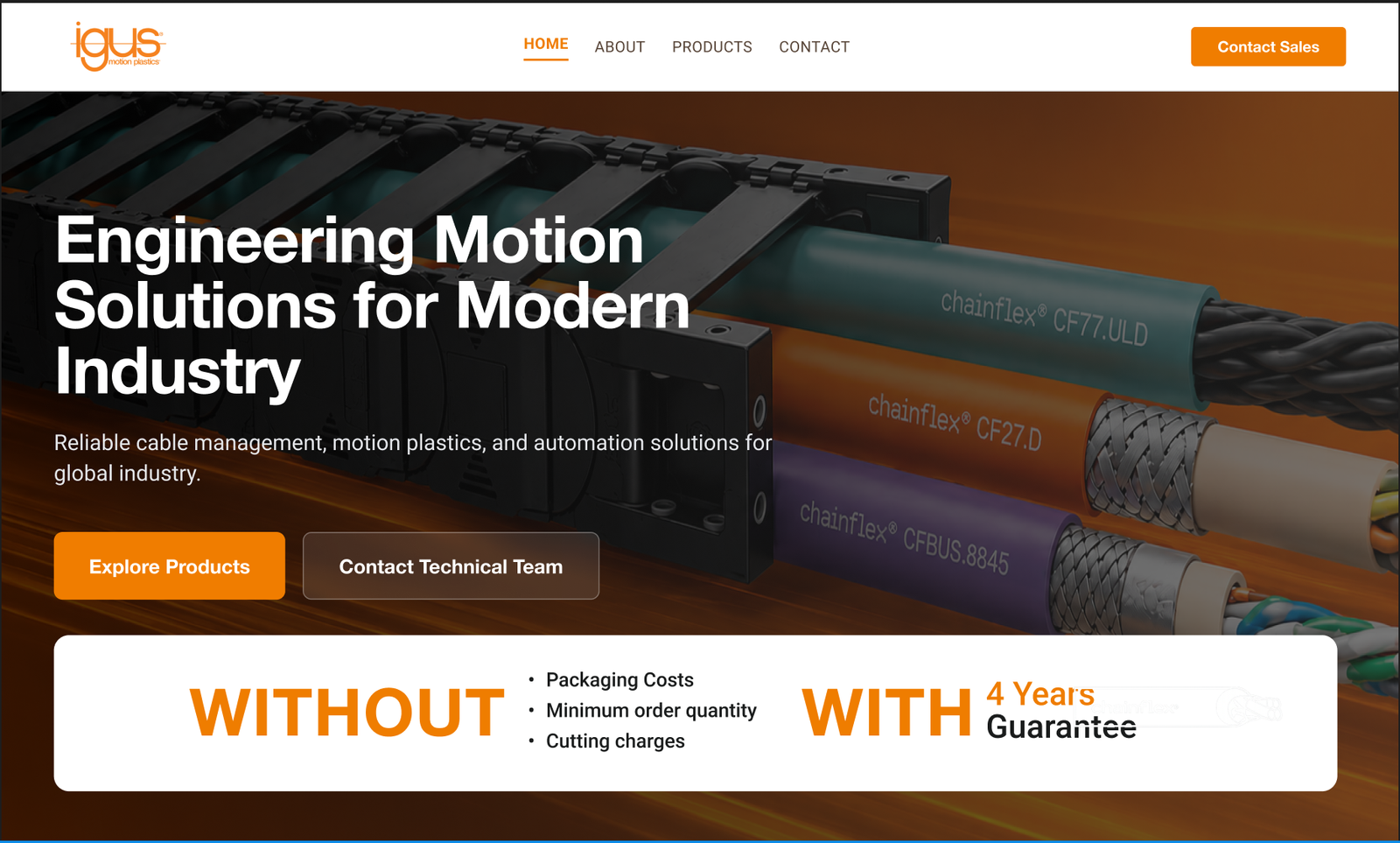
A catalogue too complex to browse, too technical to simplify
The Chainflex product line serves engineers, procurement teams, and industrial buyers who need to identify the right cable against highly technical requirements, bending radius, jacket material, voltage rating, travel distance. With 1,200+ products spanning multiple cable types, a generic e-commerce category tree would have buried the exact specification a buyer needed to confirm before purchasing.
Evidence: sales team walkthroughs of live technical queries, plus an audit of the global igus catalogue structureThe global igus catalogue this site adapted from was organized by product family and material first, a structure that makes sense for a manufacturer's internal taxonomy. But sitting with the local sales team as they walked through actual customer queries showed a different pattern: nobody called in asking for a specific cable family. They described what they were building, then what physical constraints it had to survive, and only at the end did voltage and temperature ratings come up to confirm the final pick.
Buyers weren't overwhelmed by the number of products, 1,200+ options is normal for this category. They were stalling because the catalogue's filter order didn't match the order they actually think in: application, then mechanical fit, then electrical rating. A material-first taxonomy made every search start one step behind how the buyer was already reasoning.
| Aspect | Before | After |
|---|---|---|
| Navigation | Flat category list, no technical filtering | Filters ordered by actual buyer decision hierarchy |
| Product data | Specs buried in PDFs or long descriptions | Key specs surfaced as scannable data cards |
| Brand system | Global igus system, not localized | Adapted for Indian enterprise procurement conventions |
Reordering the catalogue around how engineers actually decide
The original global taxonomy filtered by cable family first, application second. Given what the sales conversations surfaced, we changed it to application first, mechanical constraints second, and electrical ratings last, matching the order buyers already used in their heads instead of the order that made sense on a manufacturer's shelf.
More filters on the wrong starting point still forces a buyer to translate their own reasoning into the catalogue's structure before they can search at all.
Matches the decision order the sales team described hearing from customers directly, so the first filter a buyer touches is also the first thing they were already thinking about.
Application type first. Buyers start from what they're building, not a generic material category.
Mechanical constraints second. Bending radius and travel distance narrow the field to physically viable products.
Electrical ratings last. Voltage and temperature tolerance confirm the final selection once mechanical fit is settled.
Component patterns, live on iguschainflex.in
A reordered filter hierarchy only helps if the specs a buyer needs to confirm are actually scannable once they get there, so the visual system had to surface key values instead of burying them back in a PDF. The interface runs a dark, industrial visual language matching how engineers scan technical documentation, amber accent for key values, dense data cards, filter chips ordered by decision hierarchy. Hover any pattern below.
What shipped
A live B2B e-commerce experience covering the full 1,200+ product Chainflex catalogue, structured around how engineers and procurement teams actually evaluate technical products, while keeping enterprise-level visual consistency with the global igus brand. The reordering wasn't a cosmetic filter change, it changed what the first click on the site is actually asking a buyer to decide.
What I can and cannot claim. I don't have an analytics baseline from before the relaunch to cite a measured lift. What changed is structural: a catalogue that previously made every buyer translate their own reasoning into the site's taxonomy now starts from the same order they already think in.